

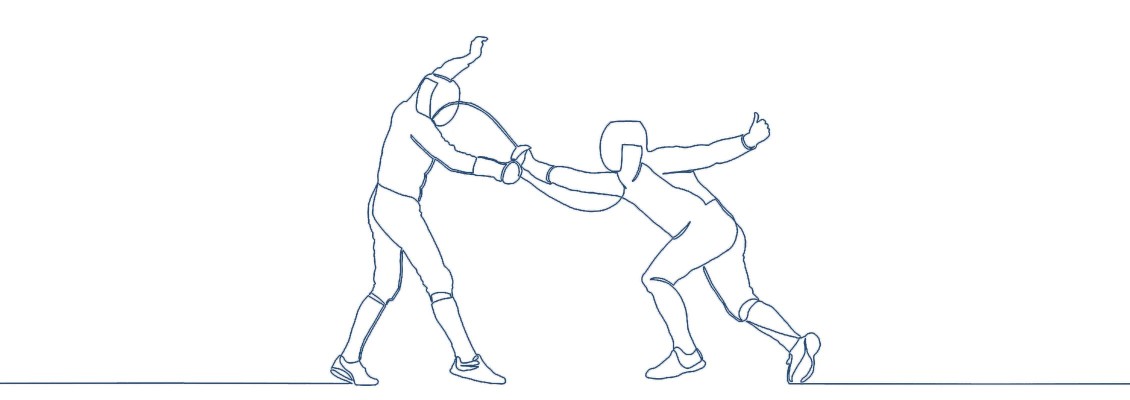
Fencing is an elegant, intelligent, and dynamic sport in which the épée holds a special place. It is the heaviest and most technical weapon in modern fencing, and its rules differ significantly from those of foil and sabre.
This article explores the basic rules, characteristics, and tactics of épée fencing.
What Is the Épée?
The épée is a thrusting weapon where the valid target area is the entire body — from the tip of the shoes to the mask.
Characteristics:
- length: 110 cm
- maximum weight: 770 g
- large guard protecting the hand
- no “right of way” rule (priority)
This makes the épée the purest form of dueling fencing — whoever hits first scores the point.
Main Rules of Épée Fencing
1. Valid Target — The Entire Body
Unlike foil (torso only) and sabre (from the waist up), in épée the entire body is valid: arms, legs, head, fingers.
This leads to many tactical bouts where hand attacks (“pistol shots”) are very common.
2. No Right of Way (NO Priority)
In épée, it does not matter who starts the attack.
If both fencers hit within 40–50 milliseconds, a double touch is awarded — both receive 1 point.
This encourages cautious play, counterattacks, and waiting for the opponent’s mistake.
3. Bout Duration and Structure
In official competitions:
- up to 15 points or 3 rounds of 3 minutes
- elimination stage: direct elimination bouts
- pool stage: bouts to 5 points or 3 minutes
If the score is tied, a 1-minute priority period is fenced — the first to score wins. If no touch is scored, the fencer with priority wins.
4. Distance and Movement
Controlling distance is essential. There are three main distances:
Long distance — safe, used for preparation
Medium distance — attack zone
Short distance — risky, often leading to counterattacks or flinches
5. Equipment and Safety
Required equipment for competition:
- mask 1600 N
- suit 800 N
- under-plastron (protective underlayer)
- electric épée
- glove
- fencing shoes with good grip
(An electric lamé jacket is not required for épée because the entire body is valid.)
The épée is a discipline that develops strategic thinking, technique, and precision. It is the closest to real dueling and combines patience with explosive actions.
If you want to start training or improve your skills, understanding the rules is essential.
Leave a Comment